Spending Time Outdoors in Germany

By Elizabeth Messenger

It is easy to find a park or any other green space in Germany to relax in. Germans take their free time very seriously and spend a lot of it outdoors. They will go hiking in the mountains, kayaking in canals or rivers, bathe in the sun on the beach of a lake, or simply have a picnic in the park after work or school. Part of the reason outdoor activities are so popular here is that Germany isn’t known for having the sunniest weather on the planet so, when the sun does decide to come out, people take advantage of it. People also view time outdoors as a way to be healthy and spend time with loved ones at the same time.

Many Germans participate in interest-oriented clubs, such as gardening, hiking, or running. Not all of these clubs are based on being out in nature, but many of them are. This is how many people meet others with similar interests and form friendships. The nature oriented culture that is found in Germany allows people to form friendships, stay healthy, and explore their country. Leipzig is known as a very green city to be in. It is filled with green space and there is plenty to do if you love being outside and want to soak up the sunshine.

The main park in Leipzig is called Clara-Zetkin Park. It is very beautiful and is so big that you could probably get lost. The park is spread out around part of the Elsterflutbett river. Parts of the park feel like you’re walking through trails in a forest instead of a park in the middle of a city. Other parts are very manicured and provide space for people to lay in the grass or play with their dogs. It’s not uncommon to see people running along the trails, fishing or kayaking in the river, or just reading in the grass at all times of day. I really appreciate that Germans take their free time so seriously and that they spend so much time outside. When I get back to the United States, I plan on taking my free time more seriously and spending more time outside in nature.

My Experience in Germany

By Kate Lewis

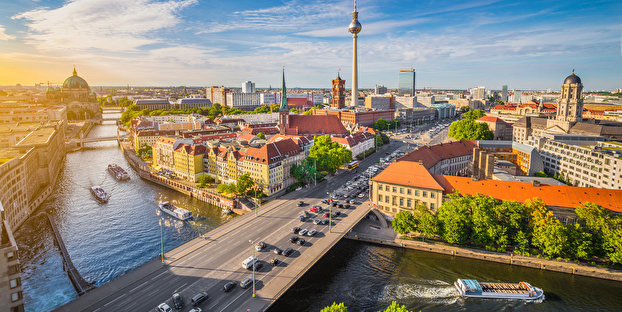
While my experience in Germany so far has been mainly positive, I did experience some culture shock. Since this was my first time ever leaving the United States, I had no idea what to expect in another country. Add that to the fact that I had never flown before, and you could say I was a little more than nervous. My biggest fear heading into Germany was my inability to speak the language. I had no idea how I was going to get to the hostel in Berlin and would have no way to ask for help. Thankfully, people from the study abroad group were on my flight and we were able to navigate Berlin together. One of the first surprising differences I noticed was the bathroom situation. I couldn’t believe that you had to pay to use them.

Ordering food was also fairly different. At sit down restaurants, instead of receiving the bill from a waiter like in the US, you actually have to go up to the counter to pay. The food options in Germany are also very different. My favorite so far has been Döner, which I had never had before coming to Germany.

I was also surprised to learn about how seriously Germans take their free time. There are always lots of people in the parks, kayaking on the river, or walking their dogs without leashes! This aspect of German society has by far been my favorite. It is refreshing to see so many people relaxing and enjoying life outside. While little things, like putting money on the counter instead of in a clerk’s hand, are still a little strange to me, I am finally getting more comfortable staying in Germany.  Throughout my time in Germany I have been so thankfully to be surrounded by a good group of people who were willing to help me through getting used to German culture. Without them, there is no way I would have ever been comfortable staying in Germany. 

Navigating the Transportation System in Germany

By Kate Lewis and Elizabeth Messenger

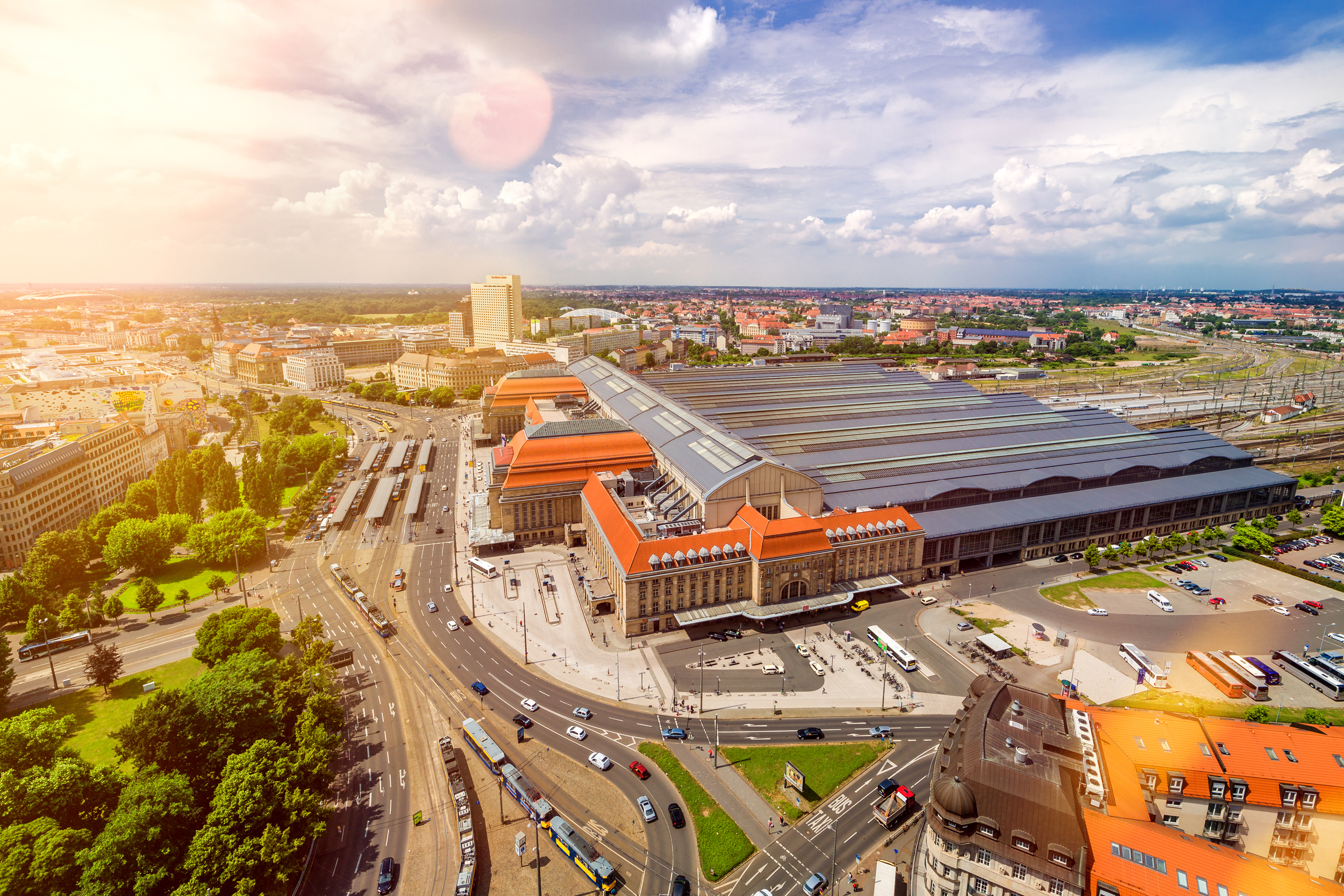
Hauptbahnhof in Leipzig

The public transportation system in Germany is excellent. And while the transportation networks can be somewhat confusing, they are expansive and can get you almost anywhere in the country. Even medium sized cities have good transportation networks. In both Berlin and Leipzig, transportation via train, bus, or tram has been fairly straightforward. Conveniently, a ticket bought for the S-Bahn can also be used for street cars and buses around the city. Unlike most other public transportation systems in the world, you do not have to verify your ticket before boarding. While this may tempt you to skip out on buying a ticket, you really shouldn’t.

Like many other practices in Germany, the train system is largely based on an honor system. People are expected to buy their tickets from machines and to validate them. After this, you can use the trains according to what is allowed on your ticket. No one checks your ticket. It is expected that you follow the rules because German society is based on rules. It only works because people take them seriously and follow them. That being said, there are people that do random ticket checks on the trains. They are dressed in plainclothes and tend to wait for the doors to shut before checking tickets. They do not take pity on tourists. Someone that knowingly rides trains without buying a ticket is known as a Schwarzfahrer. They are looked down upon because everyone else has bought their ticket and it’s inconsiderate for someone to think that they can get away with breaking the rules. The fine for not having a valid ticket is 50 euros for the first offence. Because not having a valid ticket is a crime, repeat offenders can be sentenced to time in jail. At some point in the 1980s, German students set up a Schwarzfahrer-Versicherung,or a fare-dodger insurance. If the students were caught, the insurance group would pay their fine. While there are similar schemes in other countries, this idea has not been extremely popular in Germany. Overall, the smartest thing to do would be to buy a ticket and not lose it. If you are looking to save some money, consider buying tickets in bulk and pay attention to the discounts available for weekly, monthly, annual, or group tickets.

Altes Rathaus

Blog by Kate Lewis and Adrianna Northrop

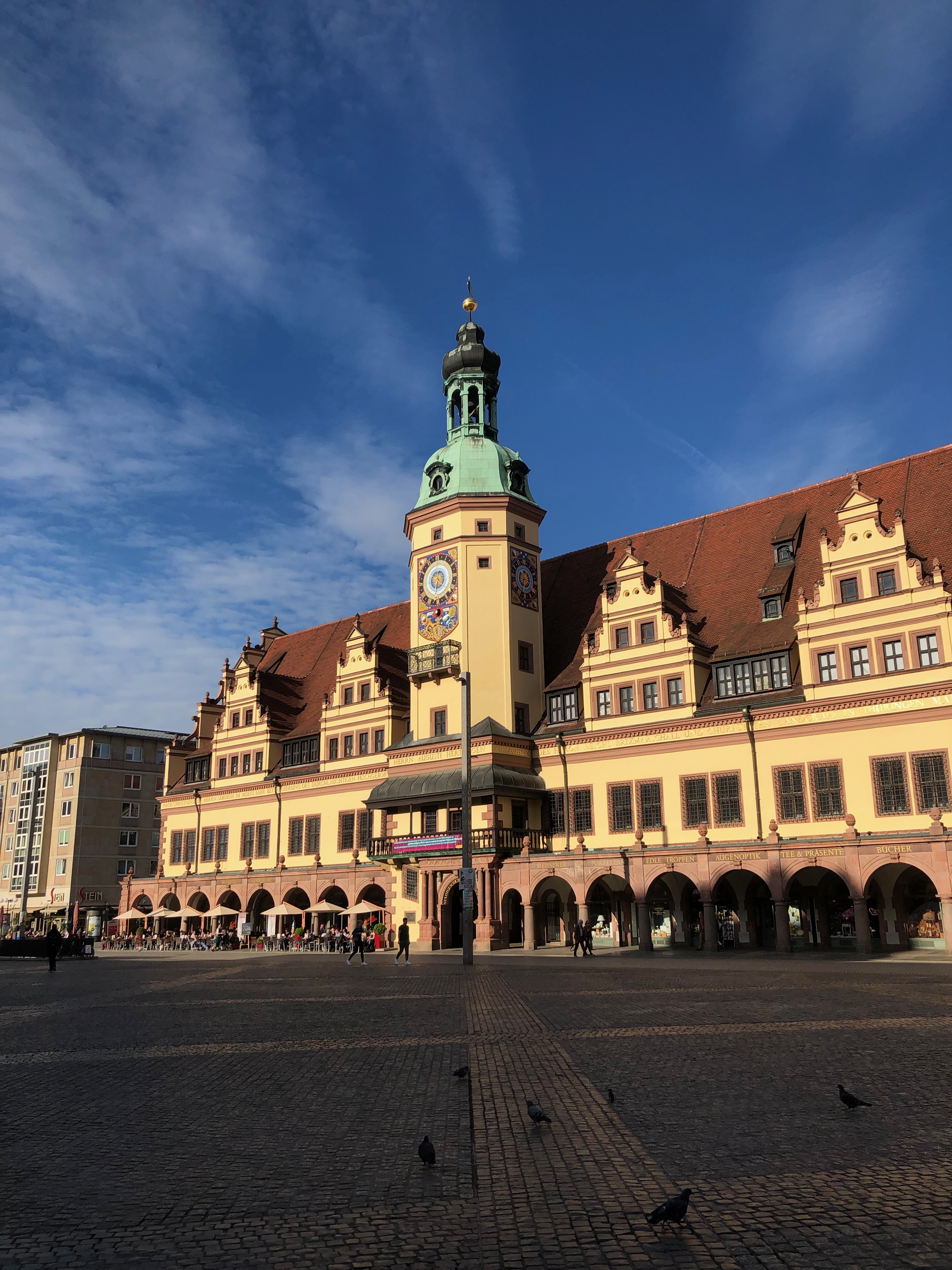
Das Alte Rathaus was formerly used as the city hall for Leipzig. Built in 1556, the facility has long been used for various events. The original architect for the building was the mayor at the time, Hieronymus Lotter. The most impressive part of the building is the large, octagonal tower that contains a clock on four of its sides. Upon doing some research on the elegant building, we discovered that the ballroom located in the building has hosted many royal weddings and festivals. Furthermore, the old prison cells still remain in the cellar of the building. Additions had been added onto the building, but it was eventually too small for governmental operations. Refurbishments on the building were carried out from 1906 to 1909. One of the rooms built during this time, the Hall’s treasure chamber, is still preserved today. Currently, the building serves as a museum of the History of the City of Leipzig. Within the museum, visitors have the chance to learn about Leipzig’s history in two separate parts. Part one includes history from medieval times up until the Battle of Leipzig in 1813. Part two contains information about modern Leipzig. Renaissance style furniture, paintings, and other household items are housed within the museum. One chair found within the museum, which formerly belonged to a mayor, contains the coat of arms of the city of Leipzig on the back. The most interesting part of the museum is the gallery containing portraits of the town’s magistrates. Burchard Berlich, Johann Friedrich August Tischbein, and Elias Gottlob Haußmann are some of the portraits are displayed.

Although we did not go into the museum, we explored the various shops located beneath the front arches of the building. Each small store was charming and specialized in different goods. Specific stores for tea, books, jewelry, and tourist gear can be found in the old city hall. We found the entire set-up quaint in the midst of a very populous and crowded area. The small shops located in such a traditional building made us feel as if we were in a fairytale. Every week, a farmer’s market is situated outside of Das Alte Rathaus, emphasizing the sense of community and importance surrounding this structure. I would definitely recommend spending time at Das Alte Rathaus and in Leipzig’s city center. The beautiful architecture and fascinating shops are more than enough reward for braving the tourist center of the city.